Booking choice: The surface walking tour, from $12 per person. Check dates Tour details
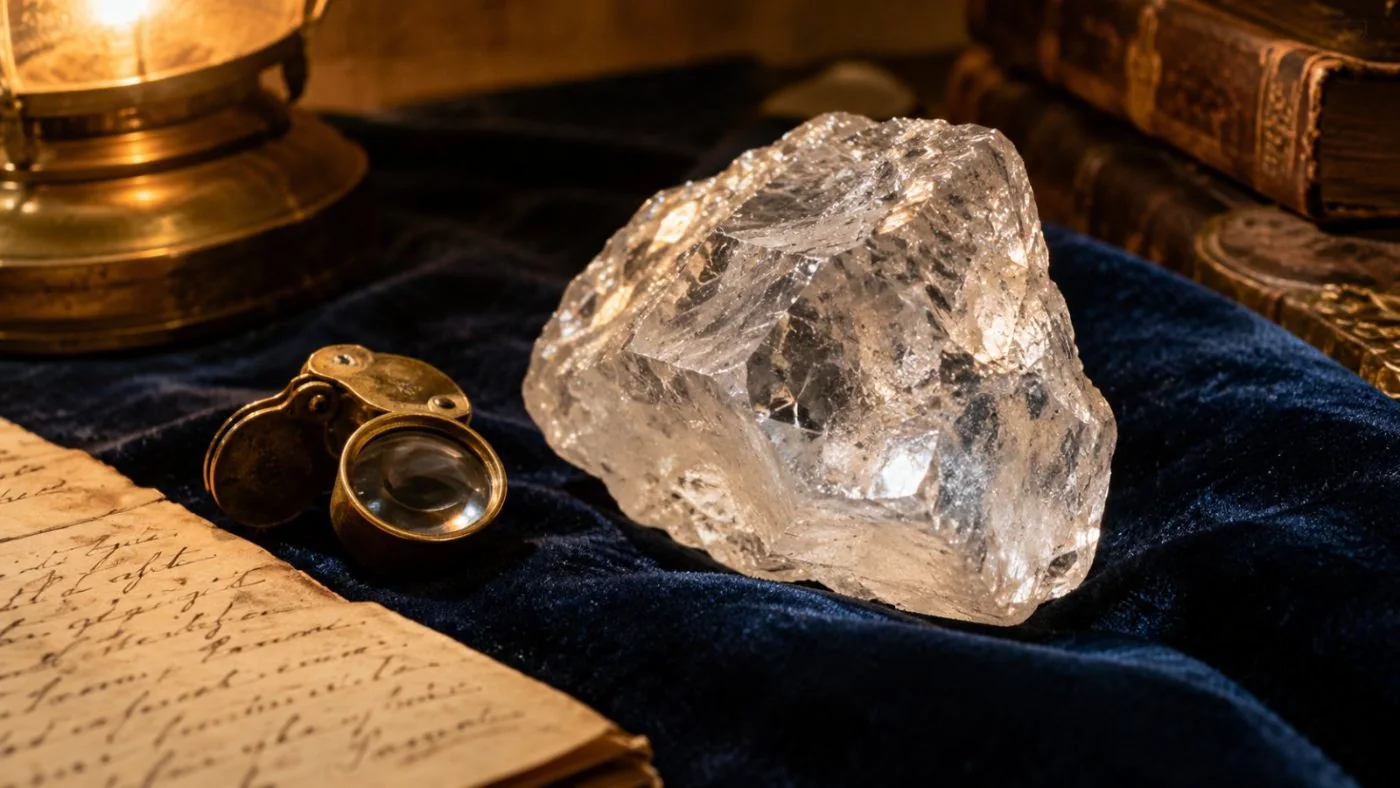
The Cullinan is the largest gem-quality rough diamond ever found: 3,106 carats, about 621 grams, dug from the Premier Mine east of Pretoria in 1905. It no longer exists as one stone. It was cut into nine major diamonds and nearly a hundred small ones, and the two biggest sit in the British Crown Jewels.
The facts below come from the Royal Collection Trust, Historic Royal Palaces and GIA. Where sources disagree, we say so.
The quick answer
Frederick Wells, the mine's surface manager, found the 3,106-carat Cullinan Diamond at the Premier Mine in January 1905. The Transvaal government bought it for £150,000 and gave it to King Edward VII in 1907. Joseph Asscher cleaved it in Amsterdam in 1908 into 9 major stones and nearly 100 small brilliants. Cullinan I and II are in the Crown Jewels at the Tower of London; III to IX are held privately by the Royal Family.
Who found the Cullinan Diamond, and when?
Frederick Wells, surface manager of the Premier Mine, in January 1905. Most sources give 26 January.
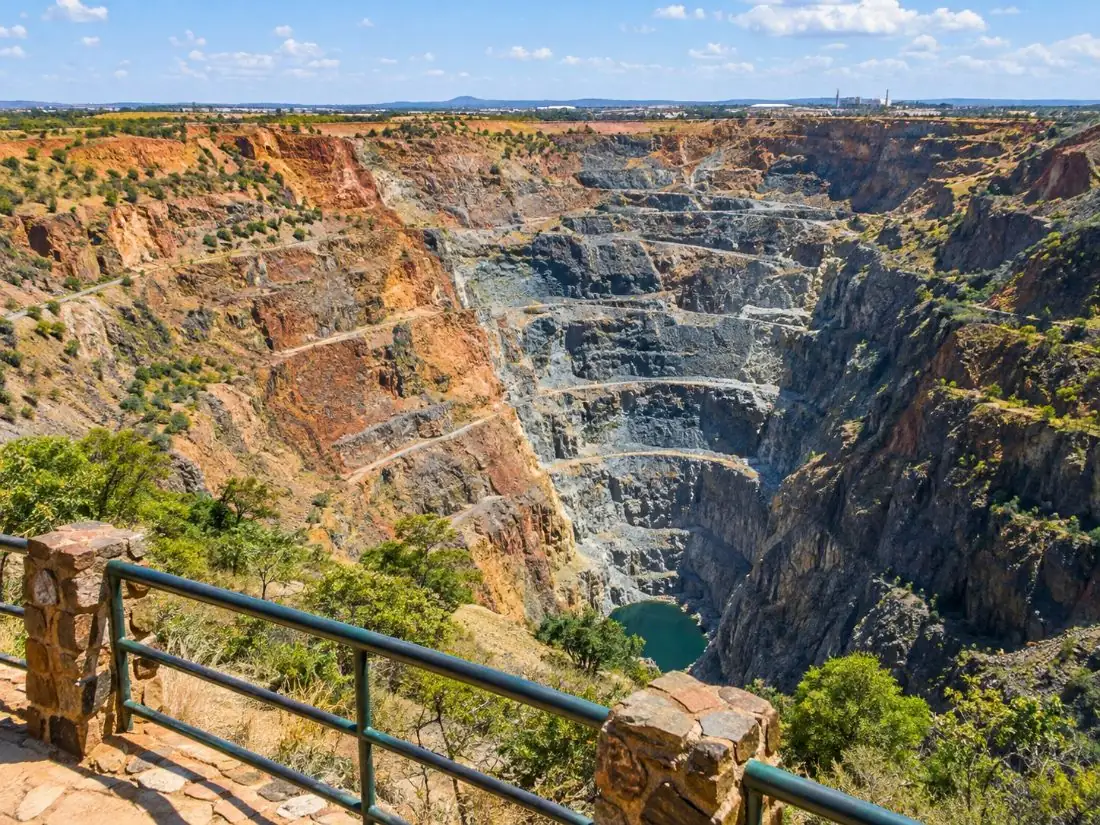
The stone lay close to the surface: 5.5 m down according to Wikipedia, 9 m according to a 2016 SAIMM paper. The mine had been registered in 1902 and open-pit mining had started in 1903, so it was barely two years old. The diamond took its name from Thomas Cullinan, the mine's owner and chairman, not the other way round. The village grew up around the mine from 1903, and the mine itself was renamed Cullinan Diamond Mine only in 2003, for its centenary.
You will often read that the reward to Wells was £3,500. We could not find a reliable source for that figure.
How big was the Cullinan Diamond?
3,106 metric carats, about 621 grams, roughly 10.1 by 6.35 by 5.9 cm. It is the largest gem-quality rough diamond ever found.
The Royal Collection Trust, GIA and most references give 3,106 carats. The figure 3,106.75 appears on some pages, but the authorities use 3,106. The words that matter are gem quality: porous black carbonado found in Brazil can be heavier, but it is not gem material.
The stone was probably part of something bigger. Four of its eight faces were smooth cleavage surfaces, which suggests it had broken off a larger crystal (source). Nobody has found the rest. The largest rough found since is a 2,492-carat stone from Botswana in 2024: see the famous diamonds guide for the full list.
See replicas of the Cullinan stones and the pit they came from, on a two-hour walk.
Check dates for the surface walking tourWhy was the Cullinan Diamond given to King Edward VII?
As a political gesture. The Transvaal Colony government bought it for £150,000 and presented it to the King on his 66th birthday, 9 November 1907.
The Transvaal had been a Boer republic until the war of 1899 to 1902, and was by then a British colony with its own government. Its Prime Minister, Louis Botha, a former Boer general, proposed buying the stone as a token of the loyalty and attachment of the Transvaal's people to the King. The purchase was agreed on 17 October 1907 and the diamond was presented at Sandringham three weeks later (source).
Was the Cullinan Diamond really sent by post?
Yes, for the trip from South Africa to London. A decoy travelled on a steamer under guard while the real stone went by registered post in a plain box.
This is the part people get half right. The postal trick applies to the South Africa to London leg: detectives guarded a decoy on the ship, and the actual diamond arrived by ordinary registered post (source).
The later move from London to Amsterdam for cutting used a different trick. A Royal Navy ship crossed the North Sea with an empty box, and the stone travelled by hand. If a guide tells you the diamond was posted to Amsterdam, that is the two stories run together.

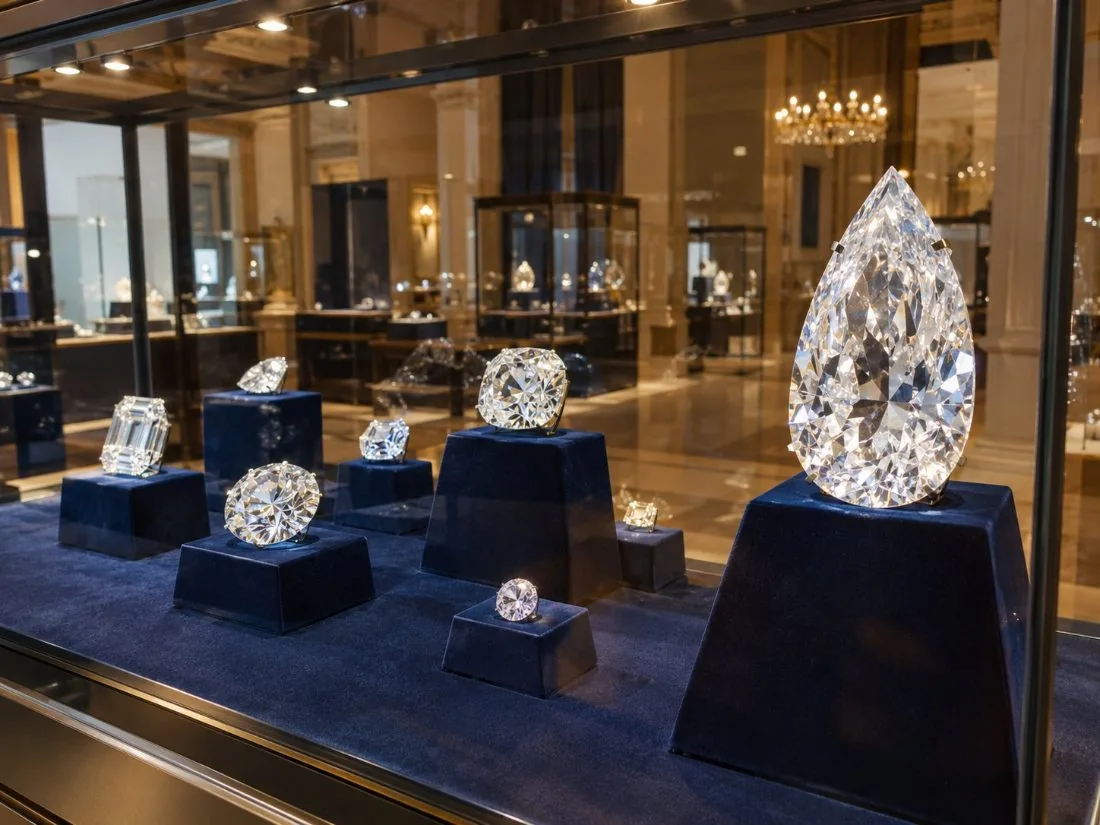
The display room has replicas of the Cullinan stones, and the Big Hole lookout shows the pit where the story began.
Explore the surface walking tour Tour detailsHow was the Cullinan Diamond cut?
Joseph Asscher of Asscher's in Amsterdam cleaved it on 10 February 1908. The first steel blade broke; the second split the stone.
The Royal Collection Trust says cutting a groove for the blade took four days, and three men then worked 14 hours a day for eight months to polish the pieces. The result was 9 major stones, numbered I to IX and weighing 1,055.89 carats together, plus about 96 small brilliants and some 19.5 carats of unpolished fragments. RCT counts 97 brilliants, so call it nearly a hundred.
Why cut it at all? The King chose Asscher to turn it into polished gems. You will read online that a black flaw forced the cut; we found no source that says so.
Where are the nine Cullinan diamonds today?
Cullinan I and II are in the Crown Jewels at the Tower of London. Cullinan III to IX are privately held by the Royal Family and not on public display.
Asscher kept the seven smaller stones as its fee. South Africa bought them and gave them to Queen Mary in 1910, and Elizabeth II inherited them in 1953 as personal property (RCT). Weights from Wikipedia:
| Stone | Carats | Where it is |
|---|---|---|
| Cullinan I, Great Star of Africa | 530.2 | Sovereign's Sceptre with Cross, Tower of London |
| Cullinan II, Second Star of Africa | 317.4 | Front of the Imperial State Crown, Tower of London |
| Cullinan III, pear | 94.4 | Royal Family, private; in Queen Mary's Crown for 2023 |
| Cullinan IV, square | 63.6 | Royal Family, private; in Queen Mary's Crown for 2023 |
| Cullinan V, heart | 18.8 | Royal Family, private; in Queen Mary's Crown for 2023 |
| Cullinan VI | 11.5 | Royal Family, private |
| Cullinan VII | 8.8 | Royal Family, private |
| Cullinan VIII | 6.8 | Royal Family, private |
| Cullinan IX | 4.39 | Royal Family, private |
Cullinan I was set in the sceptre in 1910 and can be taken out and worn as a brooch. Historic Royal Palaces calls it the largest colourless cut diamond in the world, and GIA, examining I and II in 2006, found both about D colour. Cullinan VI and VIII took a detour: Edward VII bought them for Queen Alexandra, and VI passed to Mary in 1925.
What are Granny's Chips, and which Cullinans were at the 2023 coronation?
Granny's Chips was Elizabeth II's family nickname for Cullinan III and IV. Both, with Cullinan V, were set into Queen Mary's Crown for Queen Camilla on 6 May 2023.
The late Queen used the nickname in 1958, a joke about stones she had inherited from her grandmother, Queen Mary. For the 2023 coronation, the Royal Collection reset Queen Mary's Crown with Cullinan III, IV and V. That was a choice: the Koh-i-Noor, 105.6 carats and set in the Queen Mother's Crown, stayed out of the ceremony. Cullinan I is about five times its weight.
The two big stones, I and II, went back on display in the Jewel House at the Tower of London.
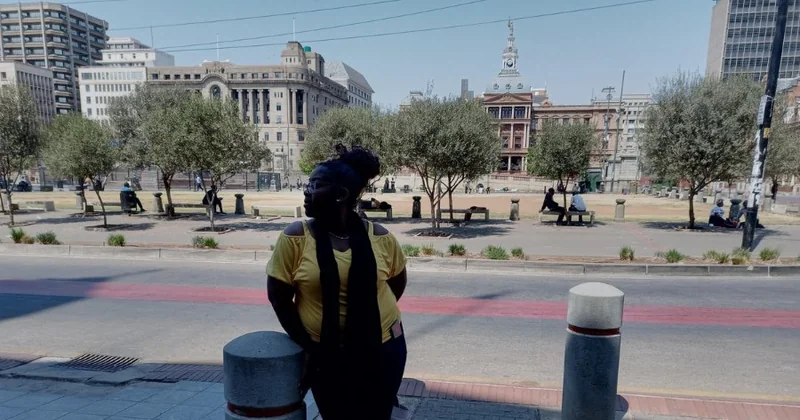
Start in Pretoria, end at the mine where the Cullinan was found, with a private guide.
Check dates for the Pretoria and Cullinan dayHow much is the Cullinan Diamond worth?
There is no official value. Historic Royal Palaces calls the Crown Jewels priceless.
Two real numbers exist. The Transvaal paid £150,000 for the rough in 1907, and Cullinan I was valued at US$2.5 million in 1908 (source). Anything you read in the hundreds of millions or billions today is a guess. The stones belong to the Crown or to the Royal Family, will not be sold, and have never been appraised in public.
The mine that produced it is still working and still finding big stones. Read is the Cullinan mine still active? for what it digs up today.

From Johannesburg: the mine where the Cullinan was found, then the Voortrekker Monument and the Union Buildings in one day.
Explore the full day from Johannesburg Tour detailsFrequently asked questions
Who owns the Cullinan Diamond now?
Cullinan I and II belong to the Crown and are held by the monarch, now Charles III, as part of the Crown Jewels. Cullinan III to IX were the late Queen's personal property and are now held privately by the Royal Family.
Is the Cullinan Diamond bigger than the Koh-i-Noor?
Yes. Cullinan I weighs 530.2 carats; the Koh-i-Noor weighs 105.6 carats after its 1852 recut.
Can you see the Cullinan Diamond in South Africa?
Not the real stones, which are in London. The surface tour at the Cullinan mine has a display room with replicas of famous diamonds.
How many diamonds were cut from the Cullinan?
Nine major stones, Cullinan I to IX, plus nearly 100 small brilliants (96 or 97 depending on the source) and about 19.5 carats of fragments.
Ready to book
Choose your tour
Free cancellation up to 24 hours before on every option. Prices are from-prices in USD and move with the season.
Cullinan Surface Diamond Mine Walking Tour
- Guided surface walking tour, about 2 hours
- The Big Hole lookout and the shaft area
- Diamond display with replicas of famous stones
Pretoria City Tour and Cullinan Diamond Mine
- Private group with your own guide
- Hotel pickup and drop-off
- Pretoria city stops in the morning
Cullinan Diamond Mine & Pretoria Full Day
- Transport from Johannesburg with a guide
- Cullinan mine surface tour
- Voortrekker Monument and the Union Buildings